
The Life of Brigadier General Benjamin Henry Grierson (1826–1911)
A narrative of the music teacher who became a Union cavalry icon and a builder of the American West
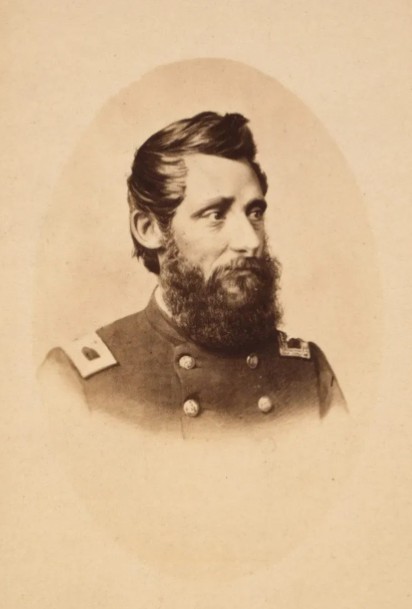 Benjamin Henry Grierson’s life is the kind of story that makes you rethink the idea of predictable destinies. Born in Pittsburgh in 1826 and raised partly in Youngstown, Ohio, nothing in his childhood hinted that he’d one day become one of the most daring cavalry commanders of the Civil War. In fact, one early moment suggested he should avoid horses forever: at eight years old, he was kicked so violently by a horse that it nearly killed him. The fear stuck with him for life—yet destiny had other plans.
As a teenager he found his calling in music, leading the Youngstown band and later becoming a music teacher and bandleader in Jacksonville, Illinois. He married, raised a family, played music, tried running a business, and lived a life that looked completely ordinary. Then came 1861, and everything changed.
When the Civil War erupted, Grierson volunteered for service. Despite his fear of horses, he found himself in the cavalry, using the skills he’d learned in music—discipline, timing, coordination—to lead men effectively. He rose quickly, becoming colonel of the 6th Illinois Cavalry, and it didn’t take long before he was given the kind of assignment that turns a man into a legend.
Grierson’s Raid — The Operation That Changed Everything
In April 1863, Grierson led 1,700 Union cavalrymen on a lightning‑fast raid deep into Confederate territory. For 17 days and more than 600 miles, his force cut telegraph lines, destroyed railroads, captured supplies, and kept Confederate commanders guessing at every turn. It was high‑pressure, high‑speed, and high‑stakes—something like the 1860s version of a modern special operations strike.
By the time he reached Baton Rouge in early May, the mission had become one of the most successful cavalry raids of the entire war. It pulled Confederate attention away from Union movements at Vicksburg and became a textbook example of how speed and disruption can reshape a battlefield.
Grierson was suddenly famous. But unlike many Civil War heroes, he didn’t fade away after Appomattox.
Grierson and the Buffalo Soldiers — Leadership with Conviction
In 1866, the U.S. Army created new regiments of Black cavalrymen led by white officers. One of these units—the 10th U.S. Cavalry—was given to Grierson to build from scratch. Leading this regiment would become the defining commitment of his postwar life, spanning nearly twenty‑four years.
Grierson didn’t treat the 10th as an experiment. From the start, he insisted on professionalism, fairness, and discipline. At a time when racism dominated military culture, he judged his men by ability, not stereotype. He defended them against prejudice and believed they deserved the same opportunities, equipment, and respect as any other soldiers.
Under his leadership, the Buffalo Soldiers became one of the most dependable and accomplished units in the Army. They patrolled vast stretches of the Southwest; escorted settlers, mail carriers, and supply trains; enforced federal policies; and built real stability in regions that had long been marked by violence and uncertainty.
Building the Frontier — Roads, Forts, Maps, and Stability
Grierson’s role on the frontier went far beyond combat.
He helped select the site for Fort Sill and oversaw its construction, turning it into a central post for the Southern Plains. He worked with government agents to distribute supplies, maintain order, and manage treaty obligations. He enforced federal law when raids or conflicts broke out but also pushed for peace when Warhawks demanded blood.
In West Texas, as commander of the District of the Pecos, Grierson led expeditions through some of the harshest landscapes in the United States. With the Buffalo Soldiers, he:
- Mapped the Trans‑Pecos
- Cut new wagon roads
- Built telegraph lines
- Assisted railroad expansion
- Stabilized remote settlements
These weren’t just military actions—they were the groundwork that allowed ranchers, merchants, families, and entire communities to take root.
In 1880, his campaign culminated in the defeat of Apache leader Victorio, bringing an end to one of the last major threats to West Texas communities.
A Lasting Legacy
By the time Grierson retired in 1890 as a brigadier general, he had lived two extraordinary lives in one:
- As a Union cavalry commander who showed nerves of steel and strategic brilliance
- And as a frontier builder who shaped the physical, political, and cultural landscape of the American Southwest
He died in 1911 at the age of 85, leaving behind a legacy defined not just by bold charges and daring raids, but by fairness, foresight, and the belief that leadership is about who you lift up, not who you hold down.
Why Grierson Matters Today
His story hits home for modern readers because it breaks the mold:
- He wasn’t born a soldier.
- He faced fears instead of avoiding them.
- He reinvented himself more than once.
- He led with principle when others took the easy road.
And perhaps most importantly:
He proved that courage, integrity, and vision can turn an ordinary person into an extraordinary leader.