
Asa Griggs Candler (1851–1929)
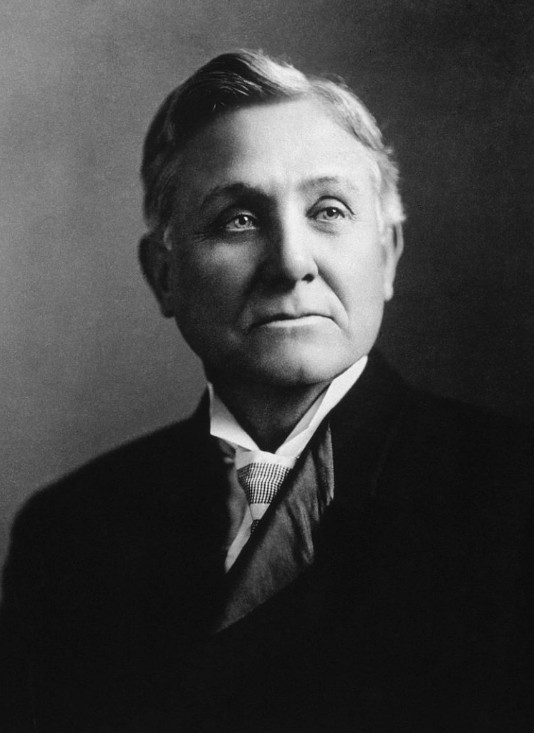 Founder of The Coca‑Cola Company • Mayor of Atlanta • Philanthropist
Asa Griggs Candler was born on December 30, 1851, in Villa Rica, Georgia. Raised in a large family of eleven children, he grew up in a household shaped by faith, discipline, and the entrepreneurial spirit of his parents. His early education was limited, but the values instilled in him—hard work, frugality, and devotion to service—guided the remarkable path he would travel throughout his life.
From a young age, Candler displayed an aptitude for business and a fascination with the medical field. He apprenticed as a druggist, gaining hands‑on experience that eventually led him to Atlanta. There, he established himself in the wholesale drug trade and quickly built a reputation for reliability and ambition. By the late 1880s, Candler had become a prominent figure in Atlanta’s thriving business community.
The Coca‑Cola Visionary
Candler’s defining moment came in 1888, when he purchased the rights to an obscure beverage syrup invented by pharmacist John Stith Pemberton. Seeing its potential, he invested fully in branding, distribution, and marketing—far beyond what any previous owner had attempted. In 1892 he officially founded The Coca‑Cola Company, transforming the drink from a local curiosity into a nationally recognized brand.
His marketing genius was unmatched for the era. Under his leadership Coca‑Cola embraced:
- Nationwide advertising campaigns
- Extensive use of branded merchandise
- Partnerships with bottling operations
- Innovative promotions and signage that made the brand iconic
Through these efforts, Coca‑Cola grew rapidly and became one of America’s most recognizable consumer products. Candler emphasized purity, consistency, and wide accessibility—principles that helped cement the company’s reputation. By the early 20th century, Coca‑Cola was firmly established as a household name.
In 1919, Candler sold his interests in the company, marking one of the most significant business transactions of its time and securing the family’s place among Atlanta’s wealthiest and most influential households.
Civic Leader and Mayor of Atlanta
Candler’s dedication to his city extended far beyond business. In 1916, he was elected as the 41st Mayor of Atlanta. His administration focused on fiscal reform, responsible budgeting, and modernization of the city’s infrastructure. Recognizing the responsibilities of public office, he turned his business affairs over to his children so he could fully devote himself to civic service.
During his tenure, Atlanta made strides in transportation, public works, and city governance. His name became integrated into the landscape through major landmarks including Candler Park, Candler Field (the early Atlanta airport that eventually evolved into today’s international airport), and the Candler Buildings that shaped the skylines of multiple American cities.
Philanthropy and the Building of Emory University
Candler is equally remembered for his extraordinary philanthropy, particularly his support of Emory College. His landmark financial gift and leadership facilitated the relocation of Emory from Oxford to Atlanta, transforming it into a major university. His generosity funded buildings, programs, and endowments that shaped Emory’s emergence as a premier institution.
Over the years, he donated millions of dollars to educational, medical, and religious causes, guided by his lifelong Methodist beliefs. The Candler School of Theology at Emory stands as a reflection of the family’s lasting influence on the university and the Methodist community.
Family Life
In 1878, Candler married Lucy Elizabeth Howard, with whom he raised five children. His family became deeply woven into the civic and cultural life of Atlanta. His children pursued careers in business, education, and real estate, and contributed to many of the city’s notable developments. The Candler family home, estates, and philanthropic endeavors became part of Atlanta’s story through much of the 20th century.
Lucy passed away in 1919, and Candler’s later years were marked by reflection, continued civic involvement, and dedication to his church and community. He died on March 12, 1929, leaving behind a legacy that extended far beyond business success.
The Magruder–MacGregor Ancestral Connection
Asa Griggs Candler’s family story includes a deep and distinguished Scottish‑American lineage through his grandmother, Martha Bernetta Beall. Born in Georgia in 1819, she was a member of the longstanding Beall family and the mother of Samuel Charles Candler’s children, including Asa’s father. Through her bloodline, Asa inherited a direct link to one of colonial America’s most storied Scottish immigrant families.
Martha Bernetta Beall was a 7th great‑granddaughter of Alexander “the Immigrant” Magruder, the 17th‑century Scotsman whose descendants became one of the most influential families in early Maryland. Alexander Magruder has long been recognized as part of the extended MacGregor heritage—a lineage shaped by centuries of Scottish Highland history, clan identity, and the survival of the MacGregor name through periods of proscription and dispersal.
This heritage carried forward in America, where Magruder descendants preserved the Scottish identity of their ancestral clan. That tradition found formal expression in 1909 with the founding of the American Clan Gregor Society. The Society’s first Chieftain, Dr. Edward May Magruder, served from its inception until 1925, guiding its early mission to celebrate MacGregor/Magruder heritage, safeguard genealogical records, and unite descendants of the clan.
Through his grandmother’s ancestry, Asa Griggs Candler stands not only as a pioneering businessman, philanthropist, and civic leader, but also as a member of this enduring Scottish‑American legacy. His connection to the Magruder and MacGregor lines forms an important dimension of his family history—one that reflects resilience, identity, and the transmission of heritage across generations.
Legacy
Asa Griggs Candler remains one of the most transformative figures in the history of Atlanta and American business. His vision turned Coca‑Cola into an enduring global brand. His philanthropy reshaped higher education in Georgia. His leadership helped modernize a growing city. And through his innovations in marketing and corporate organization, he influenced the future of American consumer culture.
Candler’s legacy lives on not only in the world‑famous beverage he helped create, but in the universities, neighborhoods, landmarks, and institutions that still carry his name.